
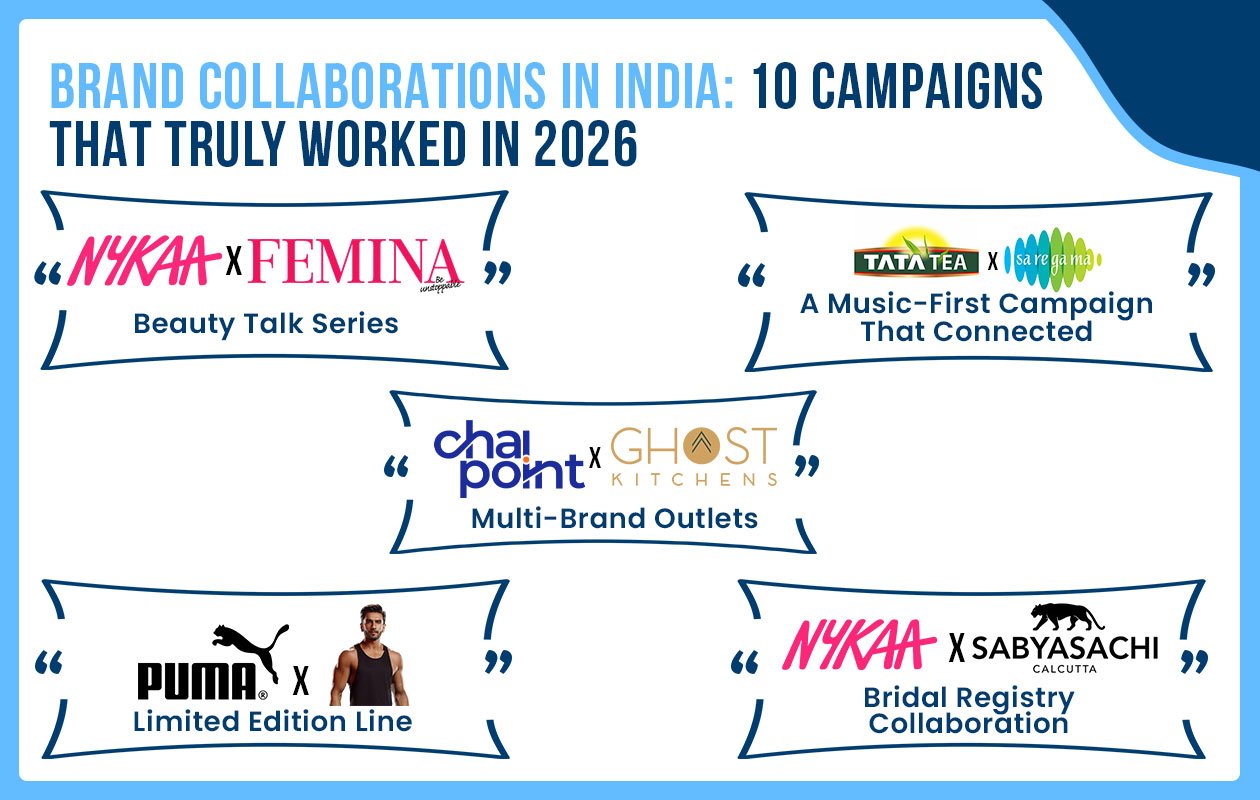
Brand Collaborations in India: 10 Campaigns That Truly Worked in 2026
Brand collaborations in India have evolved way beyond just co-branding or logo placements. Today, it’s less about visibility and more about relevance brands are partnering with a clear purpose, shared audience understanding, and strong cultural alignment. The focus has shifted from short-term hype to building campaigns that actually connect with people.
What truly sets successful brand collaborations in India apart in 2026 is their ability to tell a story, spark conversations, and deliver measurable impact. In this blog, we break down 10 such collaborations that didn’t just create noise but stood out for the right reasons strategy, creativity, and real audience engagement.
Why Brand Collaborations in India Matter More Than Ever Today
The average Indian consumer is exposed to hundreds of brand messages every day. In such a cluttered space, simply being visible isn’t enough anymore. This is where brand collaborations in India play a key role they don’t just grab attention, they build trust and relevance. Increasingly, brands are also partnering with a meme marketing agency to make these collaborations more relatable, culturally sharp, and share-worthy.
Here’s why collaborations are becoming increasingly important:
- Cutting through the noise: Partnerships bring something fresh and unexpected, helping brands stand out in a crowded feed.
- Building instant credibility: When a trusted brand collaborates, that trust naturally extends to its partner.
- Reaching the right audiences: Collaborations allow brands to tap into new but relevant consumer groups in a more organic way.
- Staying culturally relevant: Many collaborations are rooted in trends, moments, or communities, making them feel more authentic and relatable.
In simple terms, brand collaborations in India today are no longer just about expanding reach they’re about creating meaningful connections that actually resonate with the audience.
Brand Collaborations in India: 10 Campaigns That Stood Out in 2026
1- Reliance × Spotify: Bringing “Rhythms of India” to Life
Sector: Telecom × Music
Why It Worked:
This collaboration smartly blended music into everyday usage by integrating curated regional playlists directly within telecom plans. Instead of positioning music as an add-on, it became part of the daily digital experience. With exclusive artist partnerships and language-first playlists, the campaign felt deeply local rather than generic.
Impact:
The collaboration drove strong engagement across both metro cities and emerging markets. It also led to a noticeable rise in app downloads, along with higher session durations indicating sustained user interest rather than short-term spikes.
Key Takeaway:
Shared, everyday experiences create stronger engagement than standalone campaigns.
Strategic Insight:
Both telecom and music operate in high-frequency, habit-driven ecosystems. By combining connectivity with cultural content, the partnership moved beyond a one-time campaign and built an ongoing engagement loop that kept users coming back.
2- Nykaa × Sabyasachi- Bridal Registry Collaboration
Sector: Beauty × Couture
Why It Worked:
This collaboration brought fashion, beauty, and gifting together into one cohesive bridal journey. Instead of treating each category in isolation, it offered a seamless registry experience that closely matched how Indian weddings are actually planned layered, detailed, and highly personalized.
Impact:
The partnership led to higher average order values while strengthening the premium positioning of both brands. It also drove deeper engagement from bridal audiences, along with increased participation from families involved in the planning process.
Key Takeaway:
Occasion-led collaborations can drive both intent and conversions at the same time.
Strategic Insight:
Weddings in India are deeply emotional and high-investment moments. By building the collaboration around this key life stage, the brands tapped into a phase where consumers are more involved, more expressive, and more willing to spend making the partnership highly relevant and effective.
3- Tata Starbucks × Bombay Gymkhana: Brewing the “Heritage Cup” Experience
Sector: F&B × Heritage Club
Why It Worked:
This collaboration blended modern café culture with rich historical legacy. By pairing limited-edition beverages with stories rooted in the heritage of Bombay Gymkhana, the experience went beyond just consumption it became about culture, nostalgia, and identity.
Impact:
The partnership attracted premium footfall and sparked strong social conversations. It also helped deepen the brand’s association with cultural richness, making the experience feel more meaningful than a typical café visit.
Key Takeaway:
Heritage-led collaborations often feel more authentic and memorable than purely commercial partnerships.
Strategic Insight:
Instead of relying solely on global brand positioning, the collaboration leaned into local cultural relevance. By aligning with an iconic Indian institution, the brand strengthened its connection with the audience and made its presence feel more rooted and contextual.
4- Puma × Ranveer Singh- Limited Edition Line
Sector: Sportswear × Lifestyle
Why It Worked:
This collaboration stood out by positioning itself as a co-creation rather than a typical celebrity endorsement. Ranveer Singh’s bold personality and unique aesthetic were deeply embedded into both the product design and the campaign narrative, making the collection feel personal and distinctive.
Impact:
The launch generated strong social engagement, with the collection selling out quickly. It also struck a chord with younger audiences, driving high visibility and conversations across digital platforms.
Key Takeaway:
Co-created collaborations feel far more authentic and relatable than traditional endorsement-led campaigns.
Strategic Insight:
By giving the celebrity genuine creative input, the brand blurred the lines between collaborator and creator. This approach made the partnership feel natural and credible, rather than just another promotional exercise.
5- “Taste of Home”: A Nostalgia-Led Campaign by Zomato × Paper Boat
Sector: Food Delivery × FMCG
Why It Worked:
This collaboration tapped into nostalgia by pairing comforting meal options with familiar beverages, creating a complete “feel-good” experience. The storytelling leaned heavily on childhood memories, familiar flavours, and a sense of emotional comfort making the campaign instantly relatable.
Impact:
The campaign saw strong organic sharing, driven by its emotional appeal. It also delivered high recall value and led to increased basket sizes, showing that the concept resonated beyond just engagement.
Key Takeaway:
Emotion-led campaigns tend to travel further, driving both shareability and deeper audience connection.
Strategic Insight:
Both brands already operate in emotionally driven spaces one around convenience and the other around nostalgia. By building on this shared ground, the collaboration felt natural and amplified existing brand associations instead of forcing a new narrative.
6- Tata Tea × Saregama- A Music-First Campaign That Connected
Sector: FMCG × Music Archives
Why It Worked:
This collaboration connected everyday tea-drinking moments with thoughtfully curated playlists from Saregama’s classic music library. Each playlist was designed around specific moods like morning freshness or evening relaxation turning a simple habit into a more immersive experience.
Impact:
The campaign drove strong cross-generational engagement, appealing to both older audiences familiar with the music and younger listeners discovering it. It also helped strengthen brand recall across diverse consumer segments.
Key Takeaway:
When used authentically, nostalgia can create a powerful and universal connection with audiences.
Strategic Insight:
Both tea and music are deeply woven into daily Indian routines. By blending these two familiar rituals, the collaboration felt intuitive and culturally relevant, making it easier for consumers to naturally engage with the campaign.
7- Chai Point × Ghost Kitchens – Multi-Brand Outlets
Sector: Food & Beverage × Retail Innovation
Why It Worked:
Instead of relying on traditional advertising, this collaboration focused on solving a real consumer need. By introducing multi-brand kitchen formats, it allowed customers to access a wider variety of options from a single ordering point making the experience more convenient and efficient.
Impact:
The partnership helped expand customer reach while improving outlet-level economics. It also strengthened relevance in densely populated urban areas, where convenience and speed play a key role in decision-making.
Key Takeaway:
Collaborations built around utility and real-world usage often deliver stronger results than those driven purely by visibility.
Strategic Insight:
By addressing core consumer needs like convenience and choice, the partnership demonstrated how operational alignment can create meaningful brand value going beyond surface-level promotional collaborations.
8- Nykaa × Femina – Beauty Talk Series
Sector: E-commerce × Media
Why It Worked:
This collaboration focused on content-first storytelling rather than direct selling. Through expert conversations, editorial insights, and real consumer experiences, the series created value for the audience. Product integration felt natural and contextual, rather than forced or overly promotional.
Impact:
The approach helped build higher trust among consumers while strengthening the brand’s authority in its category. It also led to sustained engagement, with audiences returning for content rather than just transactions.
Key Takeaway:
Education-driven collaborations can build long-term brand equity beyond immediate conversions.
Strategic Insight:
By positioning itself as a knowledge and content platform, the brand moved beyond being just a retailer. This not only enhanced credibility but also reduced dependence on price-led competition, creating a more differentiated market presence.
9- Red Bull × Indian Gaming League
Sector: Energy Drink × Esports
Why It Worked:
Instead of limiting itself to surface-level sponsorships, the brand deeply integrated into the gaming ecosystem. By supporting tournaments, creators, and community-led events, the collaboration felt like a genuine part of the gaming culture rather than an external promotion.
Impact:
The approach drove strong engagement among Gen Z audiences, expanded visibility in Tier-2 markets, and strengthened the brand’s association with the gaming community.
Key Takeaway:
Culture-first collaborations are more likely to build long-term loyalty than transactional partnerships.
Strategic Insight:
By extending its core narrative of performance and energy into the gaming space, the brand ensured the collaboration felt like a natural evolution. This alignment made the partnership more credible and sustainable over time.
10- Tata Motors × WWF – Sustainable Mobility Series
Sector: Automotive × Sustainability
Why It Worked:
This collaboration focused on education-led storytelling around electric mobility, environmental impact, and the future of transportation. Instead of pushing products, it aimed to inform and build awareness, making the messaging more credible and value-driven.
Impact:
The campaign helped improve sustainability perception while strengthening the brand’s reputation. It also added a layer of credibility through third-party validation, making the communication more trustworthy.
Key Takeaway:
Collaborations rooted in shared values are more effective in building long-term trust with audiences.
Strategic Insight:
By partnering with a respected environmental organisation, the brand reinforced its EV narrative with authenticity. This approach reduced the need for self-promotion and instead positioned the brand as a responsible and forward-thinking player in the space.
To Conclude
The best collaborations don’t just combine logos they bring together purpose, insight, and cultural relevance. In 2026, partnerships are playing a much bigger role in shaping brand perception than standalone campaigns. Audiences today respond far more to collaborations that feel authentic, meaningful, and rooted in real cultural understanding.
At the same time, brands are increasingly relying on strategic partners to make these collaborations work at scale. This is where Idiotic Media, a leading influencer marketing agency in india, plays a key role helping brands craft collaborations that are not just creative, but also performance-driven and culturally aligned.
The most effective partnerships always begin with insight, not just a creative hook. That shift in thinking is what turns a simple tie-up into a collaboration that truly delivers impact.