
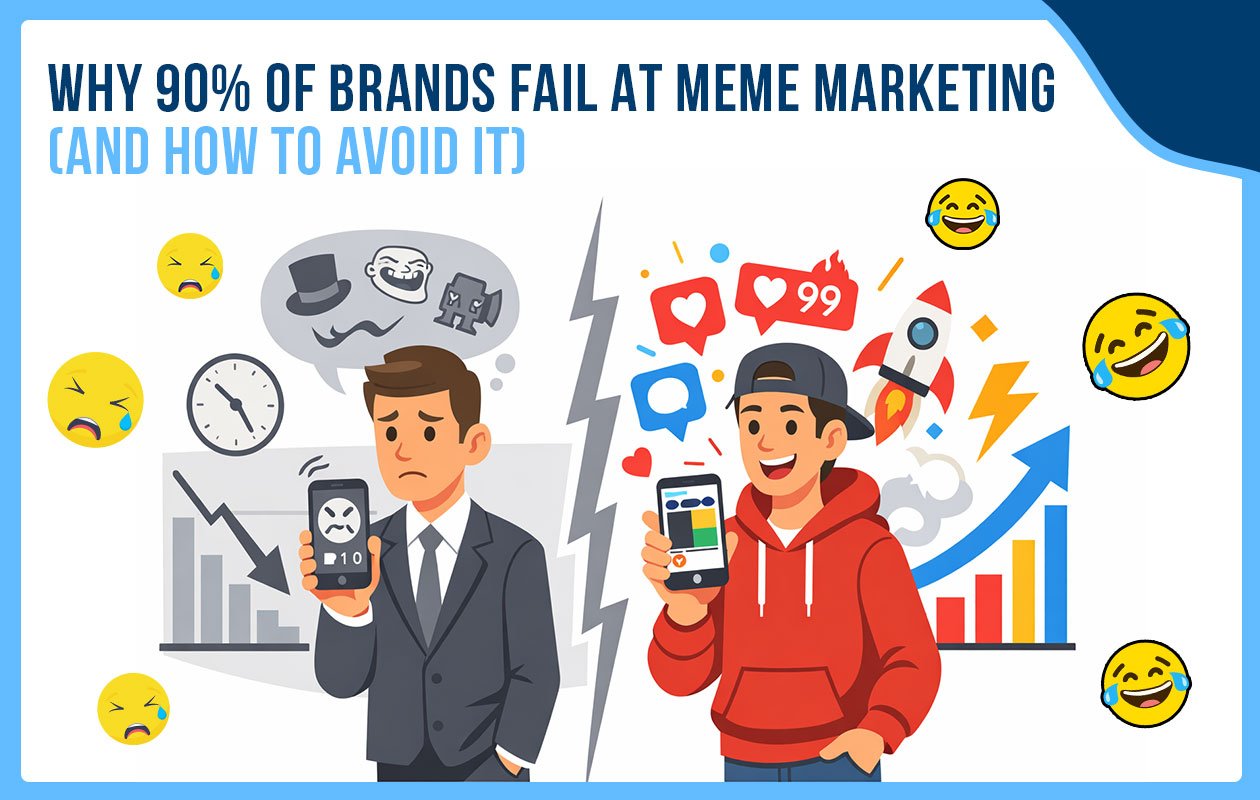
Why 90% of Brands Fail at Meme Marketing (And How to Avoid It)
Meme marketing looks fun. It looks easy. It looks like something any brand can just “start doing.”
And that’s exactly why so many brands mess it up.
From the outside, it feels simple, post something funny, ride a trend, go viral. But when brands actually try it, the engagement doesn’t come. The shares don’t happen. The comments are quiet.
So what’s really going wrong?
Why Do Brand Memes Start Feeling Cringe So Quickly?
There’s a moment when a meme stops feeling like a meme.
It’s usually the moment the brand tries too hard.
When humor turns into a sales pitch
The internet can sense when something is trying to sell. The second a meme feels like a disguised ad, people scroll past it without thinking.
Memes work because they feel native to the platform. Casual. Unpolished. Honest.
The more polished and promotional it becomes, the less it feels like culture, and the more it feels like marketing.
When the brand voice disappears
Sometimes brands copy a trending format perfectly… but it still doesn’t work.
Why? Because it doesn’t sound like them.
If your meme could be posted by any other brand and no one would notice the difference, that’s the problem.
Are Brands Simply Too Slow for Meme Culture?
Speed is brutal in meme marketing.
A joke that’s funny today can feel outdated in three days. Trends don’t wait for approval meetings.
The approval loop problem
Design review.
Brand alignment.
Manager approval.
Maybe legal review.
By the time everything is cleared, the trend has already moved on.
This is why many brands eventually work with a specialized meme marketing agency, not because they can’t make memes, but because they need people who live inside internet culture daily and can react instantly.
Why timing matters more than perfection
On the internet, relevance beats perfection.
A slightly raw meme posted at the right time performs better than a perfectly designed meme posted too late.
Do Brands Actually Understand Their Audience’s Humor?
This one is uncomfortable.
Many brands say they “know their audience.” But humor exposes whether that’s really true.
Not all humor is universal
Gen Z humor is chaotic and ironic.
Corporate audiences prefer smart, subtle humor.
Regional audiences connect with very specific cultural references.
If the tone is off, people won’t complain. They just won’t engage.
And silence online is dangerous.
Trying too hard to be “cool”
The fastest way for a brand to lose credibility is by forcing slang or trends that don’t fit.
You don’t need to sound like a 19-year-old creator if that’s not your brand. Authenticity always performs better than imitation.
Is Meme Marketing Being Treated Like a Side Hobby?
A lot of companies treat meme marketing as an experiment.
There’s no strategy. No pattern analysis. No consistency. Just random posts whenever someone has an idea.
Random posting vs intentional communication
When memes are posted without a bigger direction, they don’t build brand memory.
But when there’s a consistent tone, consistent frequency, and understanding of what works, engagement compounds over time.
Memes stop being “just content” and start becoming part of brand identity.
Are Brands Expecting Too Much, Too Fast?
This might be the biggest disconnect.
Someone eventually asks, “Okay, but how many sales did that meme generate?”
And suddenly everything is judged by direct conversions.
Memes build attention before revenue
Memes create familiarity.
Familiarity creates comfort.
Comfort creates trust.
And trust is what drives buying decisions.
Not every meme will convert. But consistent meme marketing builds something much more valuable, recognition.
To Conclude
It’s not luck.
It’s not just creativity.
It’s awareness.
The brands that succeed understand internet culture instead of trying to control it. They participate instead of interrupting. They move fast, but they don’t lose their identity.
Meme marketing isn’t about being the funniest brand in the room.
It’s about being the most relatable one.
And that’s a very different skill.
Our Top Picks
Meme Marketing: The Highest Engagement Strategy in 2026